
Academia
Description
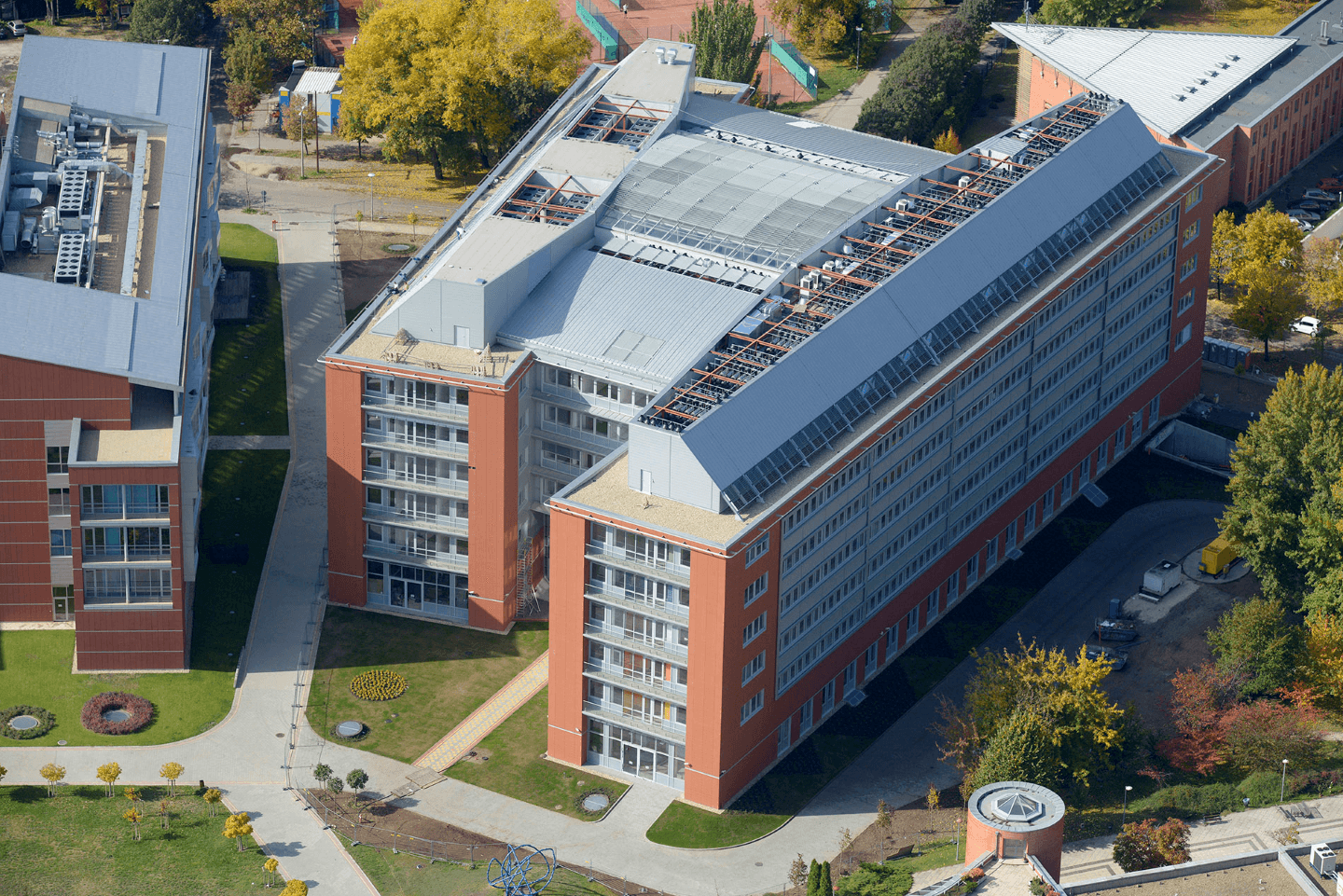
The HUN-REN Research Centre for Natural Sciences (HUN-REN RCNS), along with its legal predecessor, was established on January 1, 2012, as part of the Hungarian Academy of Sciences' institutional renewal process. Its predecessor institutes—the Central Institute of Chemical Research, the Technical Physics and Materials Science Research Institute, the Institute of Enzymology at the Szeged Biological Centre, and the Research Institute of Psychology—each possess a historical legacy spanning over half a century.
HUN-REN RCNS is an organizational unit of HUN-REN Hungarian Research Network (a legal entity performing a public service function with a special legal status) and has a legal personality of its own. As a non-profit organizational unit of HUN-REN, RCNS qualifies as a research institution (a research and knowledge dissemination organization), conducting multidisciplinary research in the natural sciences, including both the life sciences and the physical sciences. HUN-REN RCNS is entitled to apply for grants in its own name as well as receive grant funding and enter into contracts.
HUN-REN RCNS has four institutes and three smaller units: Institute of Materials and Environmental Chemistry, Institute of Molecular Life Sciences, Institute of Cognitive Neuroscience and Psychology, Institute of Organic Chemistry; Brain Imaging Centre, Centre for Structural Sciences, and Drug Innovation Centre.
HUN-REN RCNS employs 320 researchers and 164 students, some of which are volunteers. With a lab area of 7,500 m2 and an office space of 4,000 m2, HUN-REN RCNS has an extended research infrastructure, including 300 world-class labs (virus lab, FACS lab, animal unit); 157 laminar flow boxes; confocal microscopes, two-photon microscopes; fMRI, NMR, XRD, XPS, SEM EDS, TEM, TPR, SAXS; IR, Raman, absorption and mass spectrometers; gas and liquid chromatographs.
With extensive R&D connections, HUN-REN RCNS is highly engaged in the training of young scientists through holding lectures, supervising PhD students, and organizing summer events and conferences. HUN-REN RCNS acts as a catalyst for researcher mobility, sharing of research infrastructure, and multidisciplinary research thanks to its extended international collaborations. HUN-REN RCNS teams up with some of the big names in the research landscape, like Imperial College London, Johns Hopkins Medicine, Karlsruhe Institute of Technology, New York University, and Harvard Medical School. Since 2019, HUN-REN RCNS has been the driver of the Hungarian bioinformatics community by acting as the ELIXIR Node in Hungary.
HUN-REN RCNS successfully participates in national as well as international research grants. 10 research groups from three different institutes represent HUN-REN RCNS in the Hungarian Brain Research Program (NAP). 18 research groups have been funded with support from the Momentum program (Lendulet) of HAS. HUN-REN RCNS, as a consortium leader, coordinates the work of the National Laboratory of Drug Research and Development (participating partners: Szeged Biological Research Centre, Budapest University of Technology and Economics, Eotvos Lorand University, Institute of Experimental Medicine, University of Pecs). The program received a 3.5-billion-HUF budget from the government.
On the recommendation of the National Research Infrastructure Committee, HUN-REN RCNS was awarded the ’Excellent Research Infrastructure’ title in 2021. In 2022, all four institutes of the HUN-REN RCNS as well as the Brain Imaging Centre received the ’MTA Centre of Excellence’ title from HAS.